The Low-Voltage Blueprint for an On-Schedule Build

General contractor and low-voltage project manager review a CAD wiring plan on a tablet inside a luxury home under construction.

How DomesAV Coordinates With Framing Crews From Day One

A custom build moves on a rhythm few outsiders ever notice. Framing gives way to rough-in. Rough-in gives way to inspection. Inspection clears the path to drywall. Every trade on the jobsite either protects that rhythm or quietly breaks it, and low-voltage work has a way of doing the breaking when it arrives without a plan. 

For a builder managing six-figure timelines and a general contractor's reputation, the difference between a low-voltage subcontractor and a low-voltage partner shows up long before the first cable is pulled. It shows up in the paperwork, the coordination calls, and the conduit paths drawn before the walls exist. Here's what that partnership looks like on a real jobsite, from the first framing walk to final inspection.

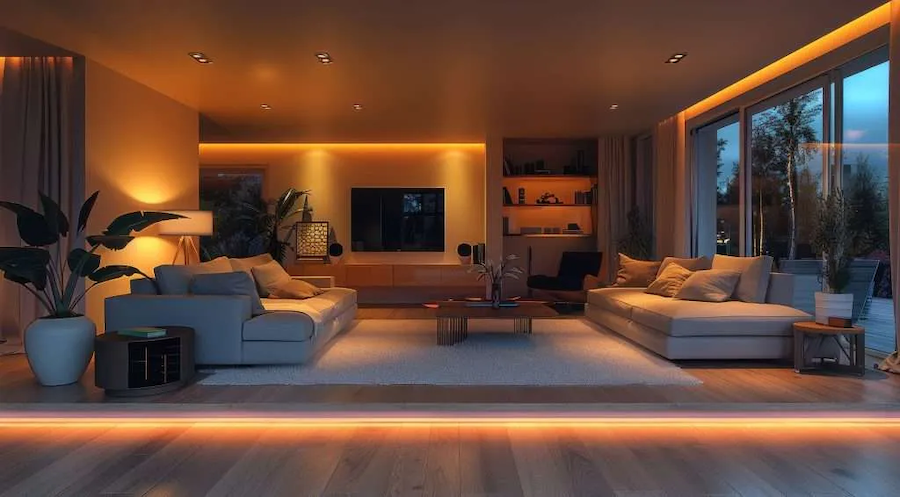
Beyond the On/Off Switch: Tunable Lighting for Custom Finishes

beyond-the-on-off-switch-tunable-lighting-for-custom-finishes

How controlling color temperature protects the integrity of luxury materials

The finishes you specify get chosen under one particular kind of light. You approve a stone slab in a showroom or hold a textile up against a window, and that single moment shapes the whole decision, even though the room will never sit in that exact light again. 

Moreover, daylight shifts constantly, cool in the morning and warm again by evening, but static lighting can't shift with it. A fixed-temperature fixture either fights that change or ignores it entirely, and the finish you spent months selecting starts to drift from your original vision. Dynamic tunable lighting exists to close that gap. Here's how controlling color temperature across the day protects the integrity of the materials you've already chosen.

Your Guide to Working with a Smart Home Integrator

your-guide-to-working-with-a-smart-home-integrator

Explore how our process builds confidence and sets every project up for success.

Planning a smart home is an exciting step, especially when your vision includes entertainment, comfort, security, and effortless control working together throughout your home. Even so, many people are unsure what the experience of working with a professional smart home integrator actually looks like. 

Understanding the process before your project begins can make every conversation more productive and help you feel confident about each decision along the way. A trusted integration partner brings technical expertise, careful planning, and open communication that support your goals from the very beginning. Keep reading to discover what to expect atyou can expect during each stage of the journey and why a structured process creates an exceptional smart home experience.

How Much Should You Budget for a Luxury Smart Home?

how-much-should-you-budget-for-a-luxury-smart-home

Discover what shapes your investment and how to plan with confidence.

Creating a luxury smart home is about more than selecting the latest technology. It's an opportunity to design a living experience that complements your routines, enhances comfort, and brings every system together with intuitive control. As exciting as that process can be, one question often comes up early: How much should you budget? 

The answer depends on your home, your priorities, and the experience you want technology to deliver every day. Having a realistic budget from the start makes it easier to explore ideas, set priorities, and create a plan that aligns with your goals. Keep reading to learn what goes into the cost of a luxury smart home system and how to make informed decisions as you begin your project. 

domes

724 First Colonial Road, Virginia Beach, VA 23451
(757) 548-2020
DCJS #11-15470

awards


Powered By One Firefly   |    Sitemap   |    Privacy Policy